Campeche to Villahermosa is not a route most travellers talk about, but it is a useful one. Villahermosa is the capital of Tabasco, a commercial city of around 340,000 people, and for travellers heading east from the Yucatán Peninsula it becomes a gateway — to the Grijalva river basin, to Chiapas via Palenque onward, or to Mexico City by air or overnight bus. Getting there from campeche city is straightforward. You have two reliable options (bus and driving) and one hybrid option worth considering.
The distance between the two cities is approximately 380 km by road across flat lowland terrain. There are no mountain passes, no major elevation changes, and the road is entirely toll-free. That makes it one of the simpler overland transfers in southeastern Mexico.
By Bus: ADO from Campeche
ADO operates service from its Campeche terminal (Av. Patricio Trueba de Regil 237, in the Tepeyac neighbourhood north of the historic centre) to Villahermosa roughly every 1–3 hours throughout the day, starting before midnight and running until late evening.
The one-way fare runs between 540 and 750 MXN (roughly US$28–40) depending on the class of service and how far in advance you book. ADO's Primera-class buses on this route are standard coaches with reclining seats, air conditioning, and an onboard restroom. ADO GL and Oriente services are also available and sometimes slightly cheaper.
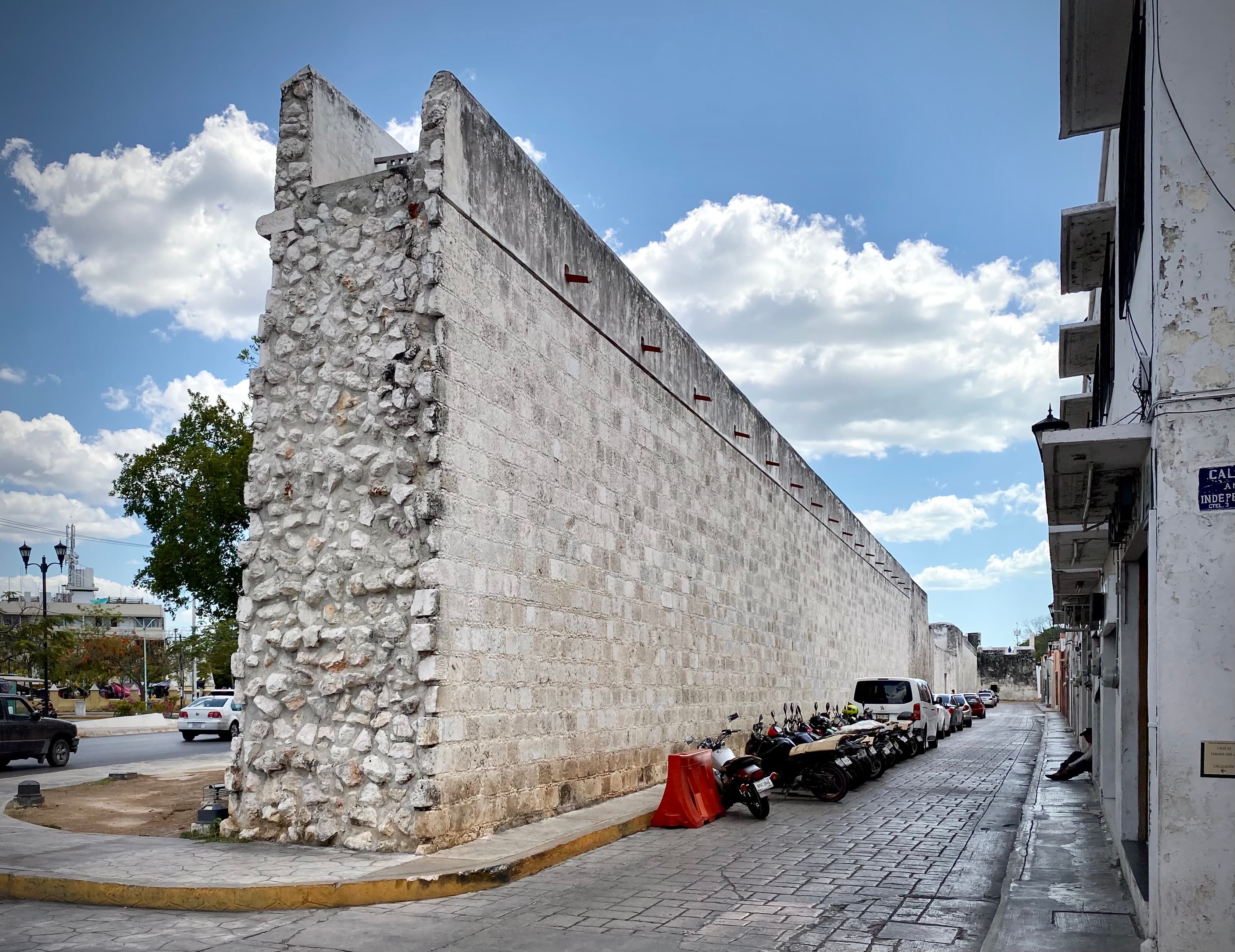
 San Francisco de Campeche viewed from the fortifications
The trip typically takes between 6 h and 7 h 15 min door to door. Most services now run as direct buses without a transfer. Earlier schedules and some overnight departures historically required a change in Ciudad del Carmen, but as of recent timetables the majority of departures on this corridor go straight through. Check your ticket when booking — if it shows a connection listed, expect an additional 30–60 minutes at the transfer point.
On-Board Experience
ADO's Primera-class coaches on this route seat around 40 passengers in a 2-2 configuration. Seats recline moderately, and there is overhead storage for carry-on bags. Luggage goes in the under-floor hold — the driver will tag your bag and give you a stub, which you present when collecting it at your destination. The air conditioning runs insistently cold on most services; bring a jacket or long sleeves even in tropical heat. The coach has a single restroom at the rear, functional but cramped, so plan accordingly for a seven-hour trip.
The route is flat and generally smooth. Buses are comfortable enough to sleep on, though road noise and occasional topes through small towns may wake lighter sleepers. Drivers on this corridor tend to be experienced with the route and generally keep to the speed limit. There is no meal service on board — the bus makes one stop at a roadside station, typically around the Paraíso area at roughly the two-hour mark. This is your chance to use the restroom, buy packaged snacks, and stretch your legs for ten minutes. Carry small bills and coins for vendors at the stop; card payment is unreliable at these roadside stands.
Campeche Terminal Practicalities
The ADO Campeche terminal is about 3 km north of the walled historic centre. A taxi from the central plaza should cost around 50 MXN. The terminal itself is clean and functional: there are ticket counters, a waiting area with seating, a small convenience store, and restrooms. Buy tickets at the counter or online through the ADO app or website. Same-day availability is usually good, but booking a day or two ahead guarantees your preferred departure time, especially on weekends.
GuideADO Campeche: Bus Station, Tickets, Routes, and Practical TipsADO is a long-distance bus network connecting San Francisco de Campeche to destinations including Mérida, Cancún, Ciudad del Carmen, Villahermosa, Escárcega, Palenque, and Mexico City. The terminal is located at Avenida Patricio Trueba de Regil 237 in the Tepeyac neighbourhood. Tickets can be purchased online at ado.com.mx, at station counters, or through resellers. Prices vary by route and class, such as $195 MXN for Economy to Mérida, $304 MXN to Ciudad del Carmen, or approximately $1,400 MXN to Cancún. Travel durations range from 2 hours 20 minutes to Mérida to 19 hours to Mexico City. Service tiers include Economy, Premium Economy, First Class, GL, Platino, and the lower-cost OCC. Economy tickets include one carry-on and one checked bag. Visitors can reach the station via a 10-minute taxi ride from the Malecón or Puerta de Tierra, costing around $40–60 MXN. The station features covered platforms, waiting areas, kiosks, and a taxi stand. Passengers should arrive 20–30 minutes before local departures and 45 minutes for long-haul trips. Buses are air-conditioned, so bringing a light jacket is recommended. For safety, keep valuables in a carry-on at your feet. Booking online at least a week ahead is advised during Christmas, New Year, and Easter.Open
Need transport? Book a transfer on WhatsApp.
Driving Campeche to Villahermosa
If you have a rental car, this is an easy drive. You take Federal Highway 186 eastbound the entire way — a single, well-signed road with no tolls.
The route runs like this: leave Campeche city on Highway 186 heading east. You pass through open ranchland and patches of low forest. After about 170 km you cross into Tabasco state. The terrain does not change — it stays flat. At roughly km 190 you reach the town of Paraíso, an oil-service settlement with fuel stations and simple roadside restaurants. From there it is another 140 km or so to Villahermosa. The highway's western segment between Villahermosa and Escárcega is being widened to four lanes in sections, which occasionally means short detours or reduced speed zones — watch for signage.
Total driving time is approximately 5 h to 5 h 30 min at normal speeds with one fuel stop. There are no cuota (toll) plazas on Highway 186 between Campeche and Villahermosa, making it one of the few fully free federal highway corridors in the region.
Along the way, fuel stations are spaced roughly every 80–120 km. Fill up before leaving Campeche city if your tank is below half — do not rely on finding a station in the more rural stretches. The Pemex station at Paraíso is a reliable stop. Roadside comedores near Paraíso serve simple Tabasco-style food: grilled river fish, tortillas, and fruit juices at prices well below city restaurants.
Driving is not difficult, but there are a few things to watch for. Topes (speed bumps) are common in small towns along Highway 186 and are not always well marked — reduce speed through every town sign. The highway has no shoulder in many sections, so slow-moving trucks can surprise you if you are passing. The Macuspana–Escárcega upgrading works have created some two-lane stretches with occasional rough surfaces. Night driving is not recommended: lighting is sparse on the rural Tabasco segments, and free-range livestock occasionally wanders onto the road. The rainy season (June to October) can leave standing water on the asphalt after heavy afternoon storms, so reduce speed in downpours and keep your headlights on. If you encounter a parade or protest blocking the road — rare but possible near Villahermosa — wait patiently or ask local shopkeepers for detours.
Villahermosa Arrival
Villahermosa spreads along the Grijalva River and is larger and more commercial than Campeche. The city's layout is modern and spread out — it is not a walking city in the way Campeche's historic centre is, so plan on taxis or ride-hailing apps to get around.
The two main bus terminals for long-distance ADO service are on the city's eastern side: the ADO Villahermosa terminal (Av. Francisco Javier Mina, about 1.5 km from the city centre) and the Tabasco terminal (Adolfo Ruíz Cortines, roughly 2.7 km from the centre). From either, a taxi to the Centro costs approximately 60–80 MXN during the day. Uber and Didi both operate in Villahermosa and are usually cheaper than street taxis — expect 30–50 MXN for a trip within the central area.
If you are flying onward from Villahermosa, Carlos Rovirosa Pérez International Airport (VSA) is 15 km east of the city on the same Highway 186 you arrived on. Direct flights connect Villahermosa to Mexico City (about 1 h 20 min, from 1,500 MXN one way on Volaris or VivaAerobus), Monterrey, Guadalajara, and Cancún. The airport is modern and compact — check-in and security are quick, and there are a few food outlets past security. Taxi from the bus terminal to the airport costs about 150–200 MXN. If you flew into Villahermosa and are now returning to Campeche by bus or car, the same information applies in reverse.
What to Do with a Layover
If your itinerary has you passing through Villahermosa as a transit point rather than a destination, the city has a few things worth a short stop. The Museo La Venta (open Tuesday–Sunday, entrance about 65 MXN) houses Olmec colossal heads and jade pieces in a shaded park setting on the city's west side. It takes 45–60 minutes to see. The Parque Tomás Garrido along the river near the centre has a collection of Olmec sculpture in an open-air setting. Neither requires advance booking. For food, the area around the Zona Hotelera on Avenida Juárez has restaurants serving Tabasco's distinctive dishes: pejelagarto (gar fish) grilled or in tamales, and plátanos rellenos de carne. Most meals run 80–150 MXN per person at casual restaurants.
Combining Bus and Train
There is no single-seat rail service between Campeche and Villahermosa on the Tren Maya. The nearest practical rail option involves taking the Tren Maya from the Campeche station eastward — but the current route routing and schedules make this a longer journey than the direct bus, and a transfer at Escárcega or another point would add hours. For most travellers, the direct ADO bus or driving is faster and simpler than combining train and bus on this corridor.
The Tren Maya does become useful if you are continuing east from Villahermosa toward Palenque or the Yucatán interior at a later stage of your trip. You would reach Villahermosa first by bus, then plan a separate rail journey from there. But as a Campeche–Villahermosa transfer, it is not the most efficient option.
Which Should You Choose?
Choose the bus if you want the cheapest door-to-door option and do not mind a long ride. The Primera buses are comfortable enough, and at 540–750 MXN per person, a couple travelling together spends less than they would in fuel alone by car. Time cost: 6–7 hours.
Choose the rental car if you are planning to continue exploring Tabasco or Chiapas afterward, or if you are travelling as a family splitting costs. Driving is straightforward, the road is free, and having a car in Villahermosa opens up riverside restaurants, the Yumká zoo, and day trips to the region's oil towns and wetlands. Time cost: 5–5.5 hours plus fuel (figure roughly 800–1,000 MXN in fuel each way depending on your vehicle).
For most travellers doing this trip one way — particularly visitors who started in Cancún or Mérida and are adding Villahermosa as a stepping stone to Chiapas — the direct ADO bus is the most practical choice. Buy the ticket the day before, take a morning departure, and arrive by early afternoon with enough daylight to orient yourself in a new city.
Quick Reference
| Mode | Duration | Cost (MXN) | Comfort | Independence |
|---|---|---|---|---|
| ADO Bus (Primera) | 6–7 h | 540–750 | Good | Low |
| Rental car | 5–5.5 h | 800–1,000 (fuel) | High | High |
| Bus + shared shuttle | Variable | 600–900 | Medium | Medium |
Need transport? Book a transfer on WhatsApp.