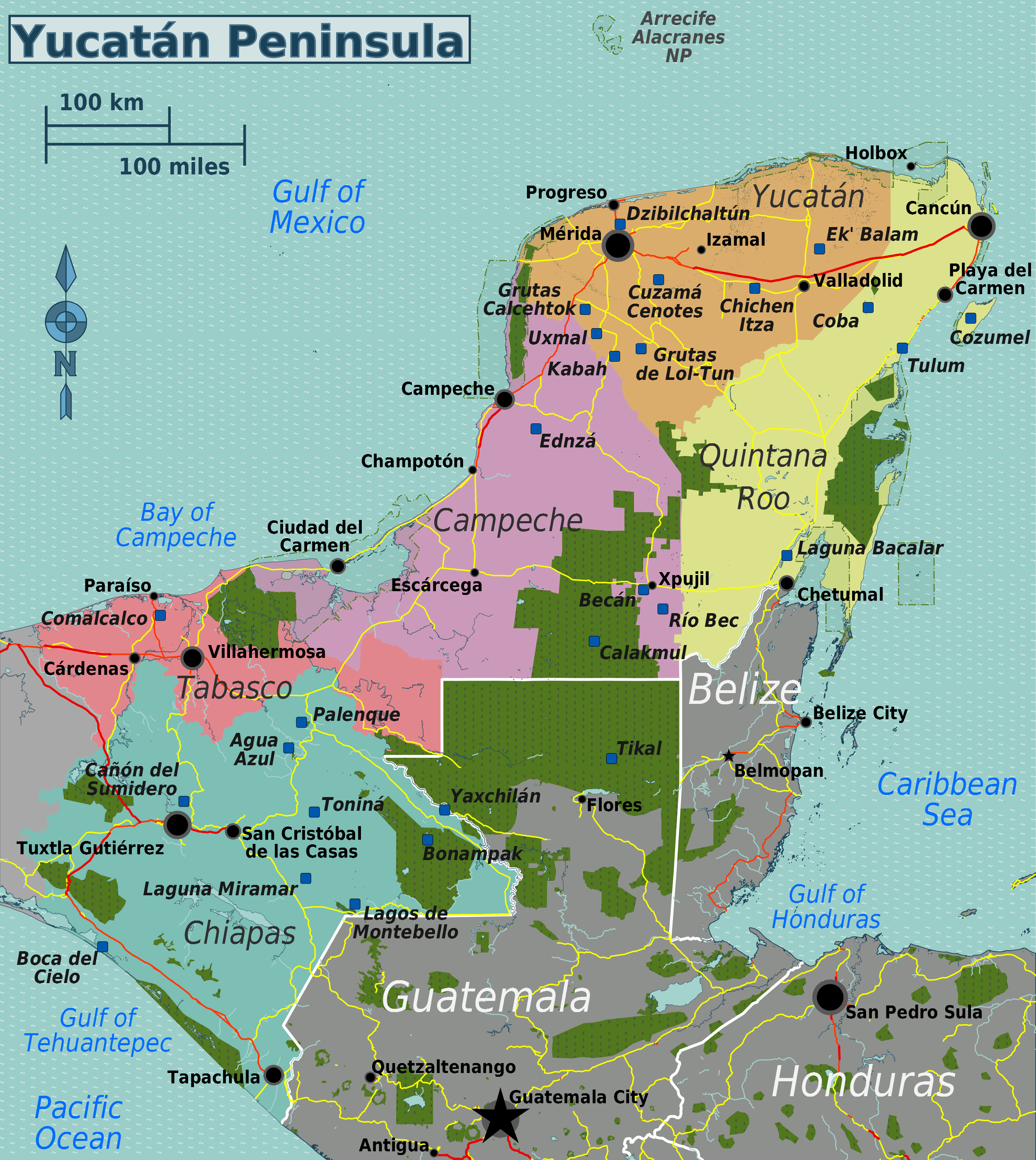

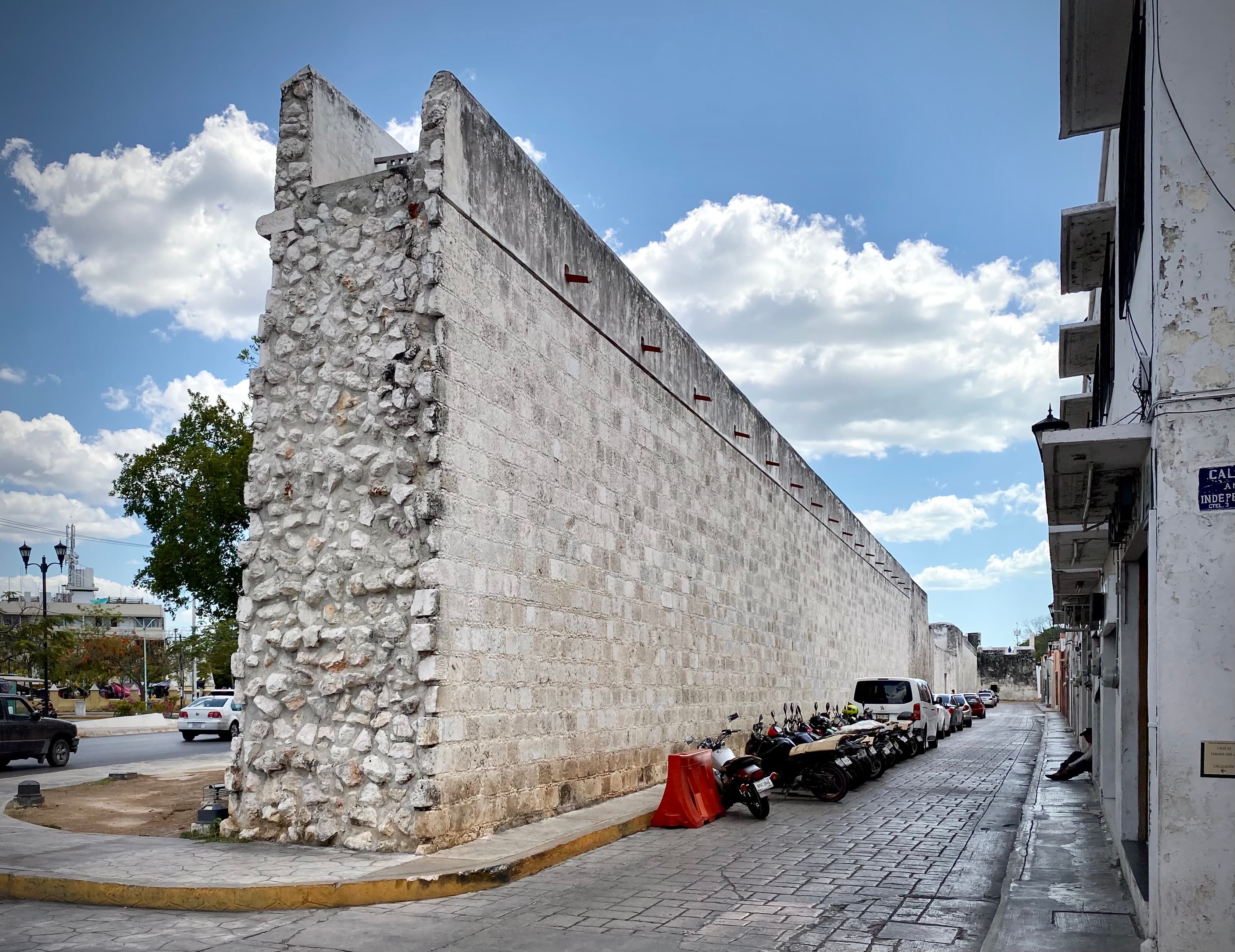
Campeche is a big state with small public-transport coverage. The walled capital, a handful of coastal towns, and the Edzná ruins are all reachable by bus or colectivo. But for Calakmul, the Río Bec circuit, cenotes, and the Ruta de los Chenes, a rental car transforms the experience from "possible with effort" to "straightforward and worth doing." The question is not whether Campeche has car rental — it does — but whether your itinerary actually needs one.
This guide breaks down when a rental car makes sense, what it costs, how Mexican insurance works, and the realities of driving in a state where topes outnumber traffic lights and jungle roads have no cell signal.
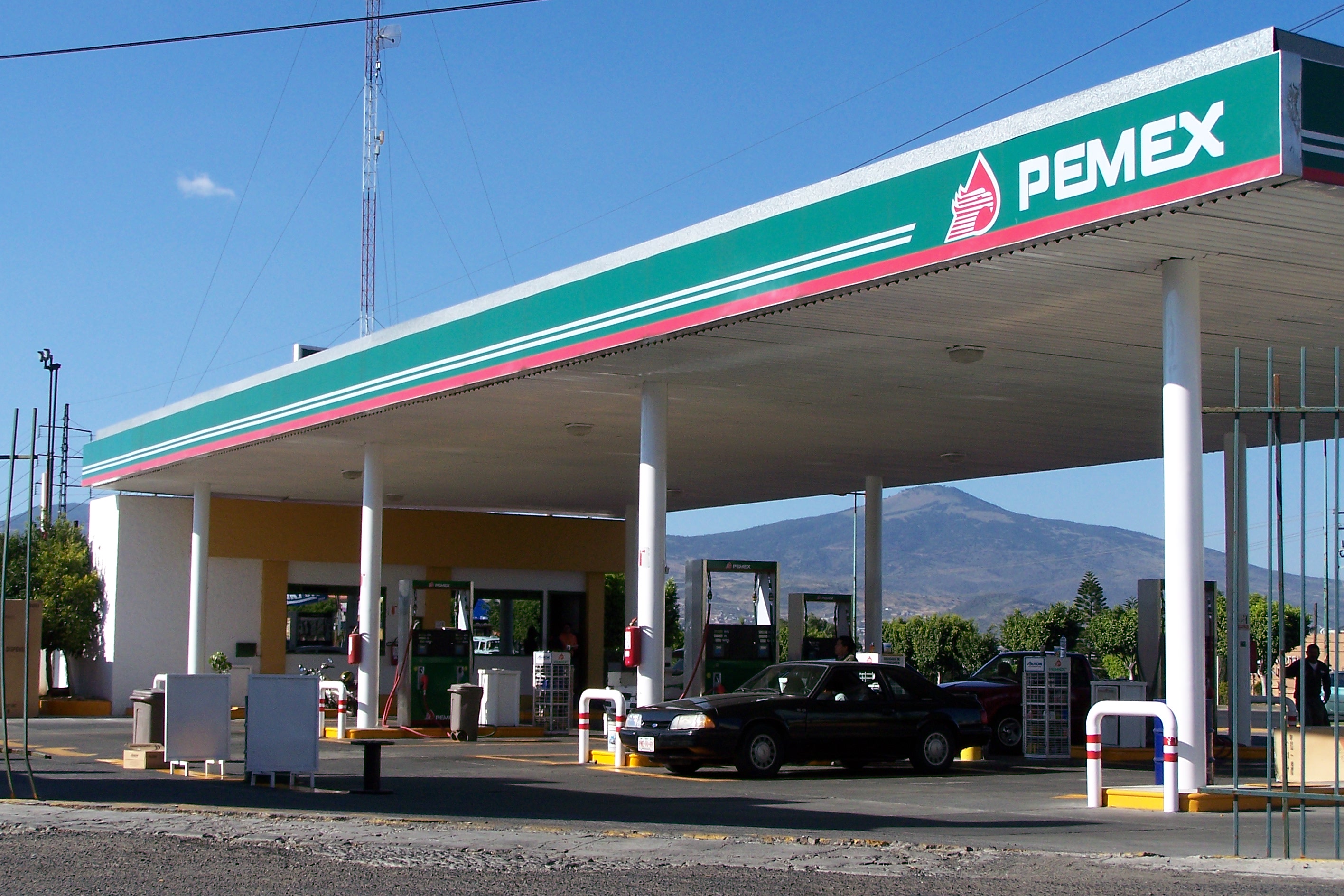 A Pemex gas station — the dominant fuel brand across Campeche and all of Mexico
When You Need a Rental Car
Calakmul and the Río Bec sites. This is the clearest case. The Calakmul archaeological zone sits 60 km off Highway 186 on a paved spur road through the biosphere reserve. There is no public transport along this road. From Xpujil, a round-trip taxi costs around MXN 1,200 per vehicle, and you are on the driver's schedule. With your own car, you set the pace, stop for howler monkeys, and detour to the Volcán de los Murciélagos at dusk. The Río Bec sites — Becán, Chicanná, Balamkú, Hormiguero — are scattered along secondary roads near Xpujil. A car lets you hit two or three in a single morning.
Ruta de los Chenes. The Chenes-style ruins (Hochob, Santa Rosa Xtampak, Dzibilnocac) sit along Highway 269 between Hopelchén and Dzibalchén. Colectivos exist but run infrequently, and there is no service between the sites themselves. A car is the only practical way to see more than one in a day.
Cenotes and inland nature. Cenotes near Candelaria and the Grutas de Xtacunbilxunaan near Hecelchakán are not on any bus route. A rental car — or a hired taxi for the day — is the only realistic option.
Coastal exploration at your own pace. You can reach Ciudad del Carmen, Champotón, and Seybaplaya by ADO bus. But if you want to stop at Sabancuy, pull over for seafood in Seybaplaya, and explore Isla Aguada on the same day, a car makes this a relaxed day trip rather than a logistical puzzle.
Need transport? Book a transfer on WhatsApp.
When You Don't Need One
Campeche city. The centro histórico is compact and walkable. Taxis cost MXN 30–80 within the city. There is no Uber or DiDi in Campeche, but taxis are plentiful and honest — agree on a price before getting in, or ask the driver to use the meter.
Edzná. Colectivos depart from Calle Chihuahua (near the market area) roughly every 30 minutes. The ride takes about 50 minutes and costs around MXN 40. No car needed unless you are combining Edzná with a Chenes-route itinerary.
Ciudad del Carmen. ADO and OCC buses run every 30 minutes from Campeche, taking about 3 hours for MXN 330–650. The town itself is taxi-friendly.
Campeche to Mérida. ADO GL and Tren Maya both cover this route in 2.5 hours. No car required unless you want to stop in Hecelchakán or along the Ruta de los Chenes en route.
Rental Agencies and Pickup Locations
Campeche has both international chains and local operators. The airport (CPE) has Hertz, Budget, Avis, Europcar, and several budget brands (Thrifty, Dollar, FireFly) — but airport counters are not always the best deal, and some travellers report aggressive upselling and signature-verification issues at major-brand counters.
Local agencies worth knowing about:
| Agency | Location | Hours | Notes |
|---|---|---|---|
| Seven Car Rental | Av. 16 de Septiembre 128, Hotel Baluartes lobby, Centro | Mon–Fri 8:00–20:00, Sat–Sun 8:00–13:00 | Recommended by travellers; WhatsApp +52 981 152 7521; often better rates than airport |
| Europcar | Downtown: Av. 16 de Septiembre 120; Airport | Airport hours vary | Two locations; downtown convenient if arriving by bus |
| Hertz | Airport only | 24/7 per aggregators | Major brand; airport convenience premium |
The airport is only 5 km from the city center — a taxi costs MXN 19–38. If you arrive by bus, a downtown pickup saves the taxi fare and often the airport premium.
What It Costs
Daily rates vary dramatically by season and booking window. Book 85–90 days ahead for the best prices.
| Vehicle class | Low-season daily (MXN) | High-season daily (MXN) |
|---|---|---|
| Economy (Nissan March) | 230–400 | 500–700 |
| Compact (Chevrolet Aveo) | 320–550 | 600–900 |
| SUV (Nissan Kicks, Duster) | 640–1,100 | 1,200–2,350 |
Seasonal price swings are steep: September is the cheapest month (up to 60% below average), while December and July are the most expensive. Airport rates tend to run higher than downtown locations from the same brand.
Fuel costs: Magna (87 octane) runs approximately MXN 24–26 per litre; Premium (92 octane) MXN 26–28. A round trip Campeche → Calakmul → Campeche (roughly 600 km) costs about MXN 900–1,100 in fuel in a compact car.
Insurance: What You Actually Need
Mexican car insurance is not optional, and your home-country policy or credit-card coverage almost certainly does not cover everything required. Here is what matters:
Third-Party Liability (Responsabilidad Civil or RC) is mandatory under Mexican federal law. It must be issued by a Mexican-licensed insurer. Your US, Canadian, or European auto policy does not count. Most rental agencies include basic liability in the base rate, but limits can be as low as MXN 50,000 — consider upgrading.
Loss Damage Waiver (LDW / CDW) covers damage to the rental vehicle. Your credit card may offer this, but many Mexican agencies reject outside CDW letters and either force you to buy their LDW or place a hold of MXN 45,000 (roughly USD 2,500) on your card. Check with your card issuer before you travel, specifically for Mexico coverage.
Supplemental Liability Insurance (SLI) raises the liability ceiling — typically up to USD 500,000 combined single limit. Worth it for peace of mind on long drives.
Budget MXN 300–600 per day for comprehensive insurance (TPL + LDW + SLI) on top of the base rate. Skipping coverage to save money is a bad gamble on Mexican roads.
Ángeles Verdes (Green Angels): Free government roadside assistance on federal highways and toll roads. Dial 078. They handle breakdowns, minor repairs, medical referrals, and accident assistance. This is not insurance, but it is a useful safety net — and a reason to keep your phone charged.
Driving Conditions in Campeche
Highways
| Highway | Condition | Notes |
|---|---|---|
| Fed. 180 (coastal) | Good; 4-lane divided near cities, narrows to 2-lane | Main route to Ciudad del Carmen and Mérida; topes in every town |
| Fed. 180D (toll) | Excellent; limited access | Faster and safer; cash accepted but digital payment mandate expected by late 2026 |
| Fed. 186 (Escárcega–Chetumal) | Generally good; well-maintained federal highway | Key route for Calakmul; gas at Escárcega and Xpujil; wildlife crossings in biosphere |
| Fed. 261 (Campeche–Escárcega) | Decent; narrower, more topes | Connects Campeche to Highway 186 |
| Fed. 269 (Ruta de los Chenes) | Poor — narrow, deteriorated, intermittent signage | Only for Chenes ruins; not recommended at night |
Topes (Speed Bumps)
Topes are the defining feature of Mexican road travel. Every town, school zone, and toll-booth approach has one. They are often unmarked or faded. Watch the cars ahead — if they brake for no visible reason, there is a tope. Slow to 20 km/h.
Night Driving
Strongly discouraged across Campeche. Unlit topes, potholes, livestock on the road, and pedestrians in dark clothing all make night driving hazardous. The stretch of Highway 186 between Escárcega and Xpujil is particularly risky after dark — no lighting, wildlife, and limited services. Plan to arrive at your destination before sunset.
Military Checkpoints
Common on Highways 186, 180, and 261, especially near Escárcega and Xpujil. National guards or military personnel typically wave tourists through but may ask your destination and check documents. Keep your licence, passport, and FMM accessible. Stay calm and answer briefly.
Fuel and Gas Stations
Pemex remains the dominant brand across Campeche, though private labels (BP, Gulf, G500, Oxxo Gas) have appeared since Mexico's 2016 energy reform. On major routes:
- Highway 180 (coastal): Frequent stations near Campeche, Champotón, and Ciudad del Carmen.
- Highway 186: Escárcega has reliable fuel. Xpujil has at least one station. Between Escárcega and Xpujil, there are roughly 130 km with limited or no fuel — fill up before leaving Escárcega.
- Calakmul biosphere spur: No fuel at all. Fill up in Xpujil before entering the reserve.
Stations are full-service — an attendant pumps for you. Tip MXN 10–20. State the denomination aloud when paying cash to avoid bill-switching. Card readers frequently fail, so carry MXN 1,000–2,000 in cash for fuel.
Mexico-Specific Rental Tips
Documentation at pickup: Valid driver's licence (Roman alphabet, or an International Driving Permit if your licence uses another script), passport, and FMM tourist card. If you flew in, the FMM is included in your airfare; if you entered by land, it costs MXN 983. Keep a printed copy — some agencies ask for it.
Deposit hold: Expect MXN 5,000–45,000 held on your credit card, depending on the vehicle and your insurance choices. Local agencies like Seven Car Rental tend to hold less. The hold is released on return.
Pickup inspection: Photograph and video every panel, tyre (including the spare), windshield, and the interior. Note the fuel gauge. Ensure the agent records all pre-existing damage on the contract. This takes 10 minutes and can save you thousands.
Age requirements: Minimum age is 21 at most agencies in Mexico. Drivers aged 21–24 pay a young-driver surcharge of approximately MXN 180–270 per day. Under 21 is rarely allowed.
One-way rentals: Available (Campeche to Mérida, Ciudad del Carmen, Cancún) but drop fees range from MXN 1,500–5,000+ depending on distance. Confirm the fee at booking.
Navigation: Google Maps works well in Campeche with a data connection. Download offline maps for the Calakmul and Río Bec areas — cell signal disappears inside the biosphere. A Telcel SIM with 3–5 GB of data costs MXN 200–300.
Has the Tren Maya Changed Things?
Partially. The Tren Maya now reaches Edzná (the station is walking distance from the ruins), Escárcega, and Xpujil. For intercity travel — Campeche to Mérida, Campeche to Escárcega — the train is a comfortable alternative to driving.
But the train does not solve last-mile access. From the Xpujil station, you still need a taxi or tour to reach Calakmul (60 km), Becán (8 km), Chicanná (5 km), or Hormiguero (25 km). The "Calakmul" Tren Maya station is a cautionary tale: it is isolated in the jungle with no services, no taxis, and no onward transport. Always book Xpujil, not Calakmul.
Bottom line: The Tren Maya replaces a rental car for Edzná and intercity hops. For Calakmul, the Río Bec circuit, and the Chenes route, you still need wheels.
Quick-Reference Decision Table
| Destination | Car needed? | Alternative |
|---|---|---|
| Campeche city | No | Walk, taxi |
| Edzná | No | Colectivo MXN 40, 50 min |
| Ciudad del Carmen | No | ADO bus MXN 330–650, 3 hr |
| Champotón | No | ADO/colectivo |
| Calakmul | Yes | Taxi from Xpujil MXN 1,200 rt; tour from Campeche USD 100+ |
| Río Bec sites | Yes | Taxi per site from Xpujil; slow and expensive |
| Ruta de los Chenes | Recommended | Infrequent colectivos; no inter-site transport |
| Cenotes / caves | Yes | No public transport |
| Coastal day trip (Seybaplaya–Sabancuy–Isla Aguada) | Recommended | Possible by bus but rigid schedule |
Practical Tips
- Book 85–90 days ahead for the best rates, especially for December–January travel.
- Get the full insurance package (TPL + LDW + SLI) — it costs MXN 300–600/day and eliminates the large deposit hold and financial risk.
- Fill up in Campeche or Escárcega before heading south. Xpujil is your last reliable fuel stop before the biosphere.
- Never drive at night. Plan your route so you arrive before sunset.
- Download offline maps for the entire state. Cell coverage is spotty on Highway 186 and nonexistent in the Calakmul reserve.
- Keep MXN 1,000–2,000 in cash for fuel, tolls, and topes-zone snacks. Card readers fail regularly.
- Save the Ángeles Verdes number (078) in your phone before you drive.
- When you pick up the car, photograph everything. When you return it, photograph everything again — including the fuel gauge and the dashboard.
Need transport? Book a transfer on WhatsApp.