Printable guide
Best Things to Do in Campeche State
Updated
From walled colonial streets and jungle-sheltered Maya ruins to lagoon boat trips and Gulf sunsets — here is what to prioritize when you visit Campeche State.

Campeche State does not shout for attention the way Mexico's better-known destinations do. It rewards travelers who are willing to drive a little farther, arrive a little earlier, and look beyond the obvious. The highlights here are spread across a large, flat state — from the fortified capital on the Gulf coast to the deep-jungle ruins in the south — and no single day covers them all. This guide groups the best experiences by region and type so you can plan a trip that fits your time and interests.
Walk the Walled Historic Centre of Campeche City
San Francisco de Campeche's UNESCO-listed historic centre is the most obvious place to start, and for good reason. The city was fortified after repeated pirate attacks in the 17th century, and more than a kilometre of the original stone walls still stand. You can walk the ramparts from the Puerta de Tierra — the old land entrance — to the Puerta de Mar, passing bastions that now house museums and a botanical garden.
Inside the walls, the grid of cobblestone streets is lined with pastel-painted colonial buildings. Calle 59, a pedestrian strip connecting the cathedral to the malecón, fills up in the evening with restaurants and live music. The Catedral de la Concepción anchors the Plaza de la Independencia, and the Fuerte de San Miguel — set on a hill just outside the centre — holds a Maya archaeology museum with stelae from Edzná and Calakmul. The site is open daily; admission is around $55 MXN (free on Sundays for Mexican nationals with ID).
GuideCampeche City Travel Guide: Walled Gulf CapitalCampeche city is a UNESCO-listed walled capital on Mexico's Gulf coast, ideal for travelers who want colonial streets, seafood, and a calm base for day trips. This guide covers the historic center — plazas, bastions, the malecón, and museums like Fuerte de San Miguel — plus practical logistics from CPE airport and how to combine a stay with Edzná, Champotón, or longer runs toward Calakmul. You will find pacing advice for humid weather, walkability notes for the grid inside the walls, and links to where-to-stay and itinerary resources. Campeche rewards slow evenings and early mornings rather than packed sightseeing lists.Open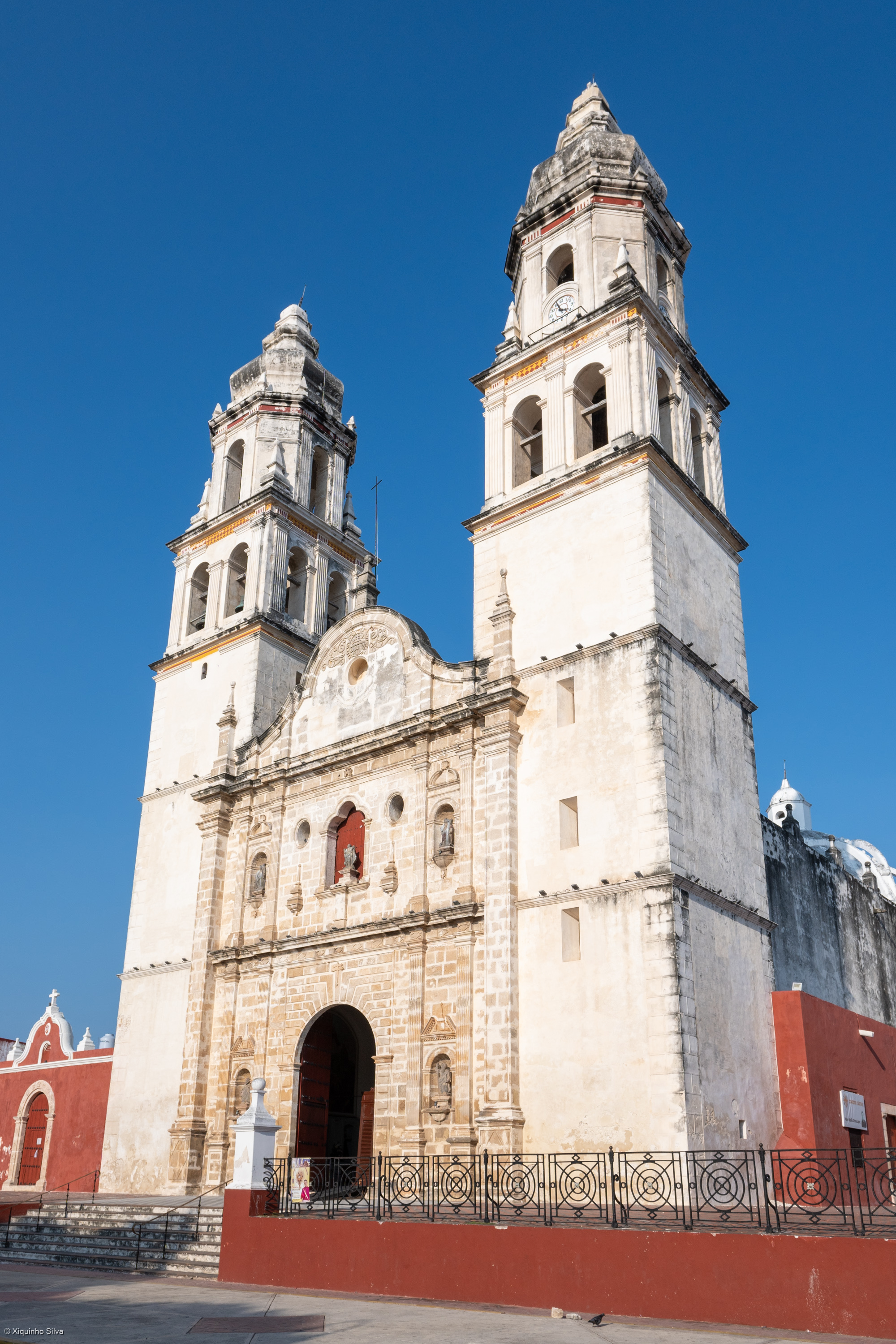
Watch the Sunset from the Malecón
 Malecón de Campeche at sunset on the Gulf of Mexico
The Malecón de Campeche runs along the city's waterfront and is best enjoyed in the late afternoon, when the heat breaks and the sky turns orange over the Gulf. Locals walk, jog, and gather with families. Vendors sell fresh fruit and fried snacks. It is not a polished boardwalk — it is a working promenade — and that is exactly what makes it worth your time. Plan to be there around 6:30–7:00 PM during the dry season (November–April) for the best light.
Visit the Edzná Archaeological Zone
Edzná sits about 55 km southeast of Campeche city, reached via Highway 180 and then Highway 261. The site was one of the most important Maya cities in western Campeche, occupied from around 600 BC to 1500 AD. Its centrepiece is the Edificio de los Cinco Pisos — a five-storey pyramid on the Great Acropolis — but the site also includes a ball court, the Nohochná (Large House), and a stucco mask that represents the sun god.
Edzná is open daily from 8:00 AM to 5:00 PM. The entrance fee is approximately $95–100 MXN. Colectivos (shared vans) run from near the main market in Campeche city and take about an hour. Arriving early gives you the site nearly to yourself — by mid-morning tour groups start arriving. Bring water and sun protection; there is little shade on the main plaza.
Drive to Calakmul
 Structure II pyramid rising above the Calakmul jungle
Calakmul is one of the largest and most powerful ancient Maya cities ever uncovered, yet it receives a fraction of the visitors that Chichén Itzá or Tulum see. The ruins sit deep inside the Calakmul Biosphere Reserve, about 300 km south of Campeche city. Most visitors base themselves in Xpujil, the nearest town, and drive in early in the morning.
The entrance fee is made up of three separate charges: an INAH fee ($100 MXN), a CONAMP biosphere fee ($215 MXN), and an ejido community fee (~$90 MXN), for a total of roughly $405 MXN per person. Guides are available for around $700–800 MXN if you want one. Structure II, at 55 metres tall, is one of the tallest Maya pyramids and offers views over an unbroken canopy of jungle. Howler monkeys are a constant presence, and birders come here for species like the ocellated turkey and the king vulture.
Plan for at least 3–4 hours at the site. The dry season (November–May) is the most comfortable time to visit; the wet season brings mud, humidity, and more mosquitoes.
Take a Boat on Laguna de Términos
Laguna de Términos is the largest estuary in Mexico, covering over 700,000 hectares of mangroves, lagoons, and coastal islands. It is a protected flora and fauna area, and boat tours depart from Isla Aguada or Ciudad del Carmen. The main draws are dolphin sightings (bottlenose dolphins are resident here), birdwatching at Isla de los Pájaros, and kayaking through mangrove tunnels.
Tours typically cost around $350–500 MXN per person for a half-day trip. Morning departures are best for wildlife — the dolphins are more active and the heat is less intense. You can also arrange fishing trips or longer excursions to the more remote parts of the lagoon.
Explore the Río Bec Route
The Río Bec region, in the eastern part of the state near the Quintana Roo border, contains a cluster of remote Maya sites that are among the most architecturally distinctive in the Maya world. Becán, Chicanná, Xpujil, and Hormiguero are all within a short drive of each other and can be visited in a single long day from Xpujil.
Becán is the standout — its twin-towered structures and dry moat are unlike anything else in the region. Chicanná is smaller but famous for its well-preserved stucco monster-mouth entrance. These sites see very few visitors, and the drive through the jungle is part of the experience. A car is essential; there is no public transport connecting these sites.
Eat Your Way Through Campeche City
Campeche's food is Gulf Coast seafood with Mayan and Spanish influences. Pan de cazón — layered shark tortilla casserole — is the signature dish. Fresh ceviche, grilled snapper, and shrimp cocktails appear on nearly every menu. The Mercado Municipal is the place to try affordable local food; Calle 59 has the best sit-down restaurants. For breakfast, look for huevos motuleños (eggs on tortillas with black beans, plantains, ham, and peas) or chilaquiles.
Practical Tips
- Getting around: A car is necessary for anything beyond Campeche city. The state is large and public transport is limited for rural and archaeological destinations.
- Best time to visit: November through April offers the most comfortable temperatures and the least rain. June through October is hot, humid, and brings a risk of hurricanes.
- Cash: ATMs are available in Campeche city and Ciudad del Carmen, but not at smaller sites or in Xpujil. Carry enough cash for entrance fees, meals, and fuel.
- Heat: Temperatures regularly exceed 35°C from May to September. Start outdoor activities early, carry at least two litres of water, and take a break during the midday hours.
Planning a trip to Campeche? Our WhatsApp assistant can answer quick questions about logistics and timing. For a fully customized itinerary, our Trip Plan & Booking Portal connects you with local guides who know the state well.