Printable guide
Best Day Trips from Campeche City
Updated
The best self-organized day trips from Campeche City — from Maya ruins and Gulf beaches to hat-weaving caves and jungle wildlife — with practical logistics for each route.
Campeche City makes an excellent base for exploring the state. Most attractions sit within a one-to-two-hour drive, and the roads are generally paved and well-signed. You can rent a car, hire a taxi for the day, or — for the most accessible destinations — use colectivos and combis from the city's secondary bus terminal. This guide covers the best day trips you can organize yourself, with honest assessments of drive times, costs, and what makes each one worth your time.
Edzná: The Essential Maya Day Trip
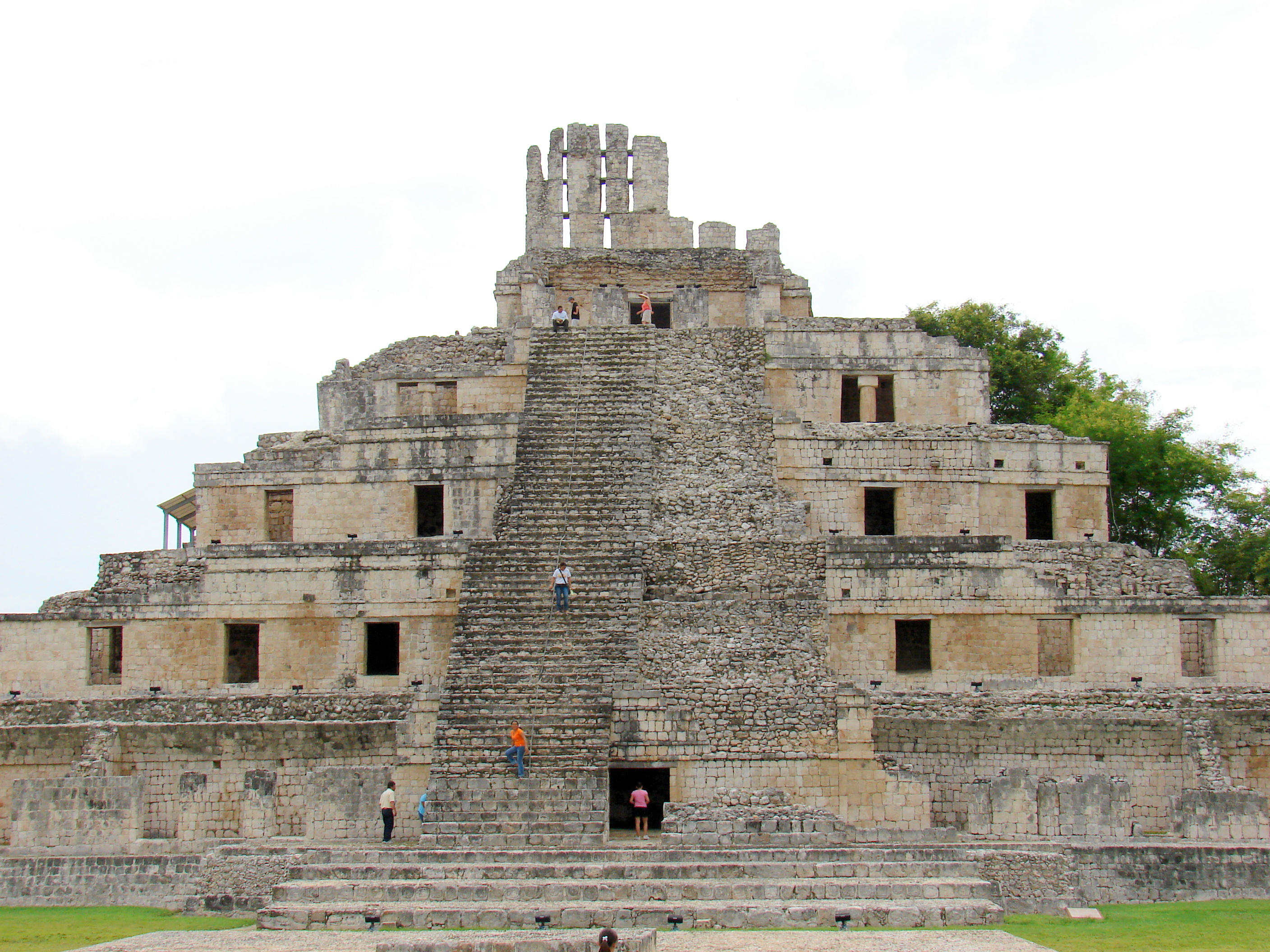
Edzná Five-Story Pyramid, the architectural highlight of the site
Edzná is the strongest day-trip candidate from Campeche City. Located 60 kilometres southeast on a good paved road, the drive takes about one hour. The site opens at 8 AM and closes at 5 PM, and entry costs around 85 MXN. Plan to spend two to three hours walking the ceremonial centre.
The standout structure is the Building of the Five Stories — a tiered pyramid-palace with no architectural parallel in the Maya world. Occupied from around 400 BCE to 1500 CE, Edzná supported a population of over 30,000 at its peak. The site also features a vast main plaza, a Temple of the Masks with preserved stucco faces, and a sophisticated system of ancient canals that managed water across the entire city.
Getting there on your own: Drive southeast on the highway toward Cayal and follow signs for Edzná. Free parking is available at the entrance. Alternatively, colectivos depart from Campeche's market area (near the secondary terminal) in the morning — frequency is limited, so check the schedule the day before and plan for an early start.
Combination option: After Edzná, continue south to Seybaplaya beach (about 45 minutes further) for a Gulf seafood lunch and a swim. This makes a full, rewarding day: ruins in the morning, coast in the afternoon, back to Campeche by sunset.
GuideEdzná Travel Guide: Day Trip from Campeche CityEdzná is Campeche state's most accessible major ruin — roughly an hour from the walled city — centered on the Temple of the Five Stories and a compact acropolis complex. This guide outlines opening strategy for heat and light, car and tour logistics, typical visit length, and smart pairings such as a Champotón seafood lunch on the return drive. It is the right first ruin day for most Campeche itineraries before committing to Calakmul's long jungle drive.Open
Bécal: Hat Weaving in Limestone Caves
Bécal sits about 80 kilometres north of Campeche City, roughly a 1.5-hour drive. This small town in the Calkiní Municipality is known for one thing: jipi japa palm hats woven entirely by hand inside natural limestone caves. The caves maintain humidity that keeps the palm fibers pliable during the weaving process — a technique passed down for generations.
In the town centre, look for the monumental sculpture of three oversized hats marking the main square. From there, you can walk to workshops where artisans demonstrate the full process — from stripping and bleaching the palm fibers with sulfur vapors, to dyeing them with local shrubs, to the weaving itself. Every hat is handmade, and prices range from a few hundred pesos for basic models to over 1,500 MXN for fine-grade pieces.
Practical: Bécal works well as a half-day trip on its own, or you can combine it with a stop in nearby Calkiní for lunch. There is no entrance fee to visit the workshops — the expectation is that you will buy a hat or tip the artisan for showing you the process. Bring cash in small denominations.
Champotón: Gulf Coast Seafood and Empty Beaches
 Champotón beach on the Gulf of Mexico
Champotón is a fishing town of about 30,000 people located 80 kilometres south of Campeche City — roughly one hour by car. The town sits where the Champotón River meets the Gulf of Mexico, and the main attraction is straightforward: fresh seafood, calm beaches, and a pace of life that feels genuinely unhurried.
The best beaches are about 15 kilometres south of town. Punta Xen and Chenkán are the most well-known stretches, with fine sand, gentle surf, and — during nesting season — the chance to see protected sea turtles. Closer to town, Playa Boca del Río sits on the seaside of the bridge and works for a quick dip.
Where to eat: The restaurants lining the malecón and near the town centre serve what you came for — fresh fish, shrimp, and ceviche at prices well below what you would pay in Mérida or Cancún. Pan de cazón (layered tortilla pie with dogfish shark) is the regional specialty and worth trying. Budget about 100–200 MXN per person for a full seafood meal at a sit-down restaurant.
Getting there: Drive south on the highway or take an ADO bus from the main terminal. The colectivo option from Campeche's secondary terminal also works. If you drive, the beach stretches are well-signposted from the town centre. The town itself is walkable — the main square, the Bastion of San Antonio, and the 18th-century Our Lady of Mercy Church can be seen in an hour.
Guide5-Day Campeche Itinerary: City, Ruins, and Gulf CoastThis five-day Campeche itinerary balances the walled city, an Edzná ruin morning, a Gulf coast run to Champotón, and either a deep Calakmul overnight or extra city and cenote time near Hopelchén. It assumes a rental car, builds in heat-aware pacing, and offers a shorter variant if you skip the southern jungle. Link out to dedicated city, Edzná, and Calakmul guides for detail on each segment.Open
Hopelchén and Hochob: Chenes-Style Ruins Off the Main Route
For travellers willing to drive a bit further, the eastern route toward Hopelchén (100 kilometres, 1.5 hours) leads to the small Maya ruin of Hochob, a fine example of Chenes-style architecture characterized by monster-mouth doorways and elaborate stone facades. The site is compact — you can see everything in under an hour — but the carved facades are among the most striking in the region.
Hopelchén itself is a quiet agricultural town that works as a lunch stop. The surrounding countryside is traditional Maya territory, and local restaurants serve home-style food at modest prices. From Hopelchén, you can loop back toward Campeche via a different route, passing through Hecelchakán.
Practical: This trip requires a rental car — there is no practical public transport to Hochob itself. Bring water and snacks, as the ruin has no services. Entry is around 85 MXN. The full day runs eight to ten hours including driving.
Hacienda Uayamón: Colonial History Close to Town
Just 40 kilometres south of Campeche City (about 40 minutes by car), Hacienda Uayamón is one of the closest day-trip destinations. This former henequen estate dates to the colonial period and has been partially restored. The property features original architecture, gardens, and a glimpse into the agricultural economy that shaped Campeche's 19th-century prosperity.
The hacienda works as a half-day outing — spend a couple of hours walking the grounds, then continue to nearby Champotón for lunch or head back to Campeche for an afternoon on the malecón. Check locally for current opening hours and any day-visit fee, as these can change with the seasons.
Isla Aguada and Laguna de Términos: Dolphins and Mangroves
Isla Aguada is Campeche's designated Pueblo Mágico, located 160 kilometres southwest of the city — about two hours by car. The town sits on the edge of Laguna de Términos, one of the largest coastal lagoons in Mexico and a recognized biosphere reserve.
The main draw is dolphin watching. Bottlenose dolphins are permanent residents of the lagoon, and guided boat tours offer near-guaranteed sightings. Tours typically last two to three hours and cost between 500 and 800 MXN per person. The lagoon is also home to mangrove channels, wading birds, and — with luck — manatees.
Honest assessment: The two-hour drive makes this a long day trip. If you are short on time, the closer options above may be more practical. But if wildlife and lagoon landscapes are a priority, Isla Aguada delivers an experience that is hard to find elsewhere in the state. Bring binoculars, sunscreen, and water.
Calakmul: The Case for an Overnight Instead
Calakmul is the largest and most impressive Maya site in Campeche, but it sits 300 kilometres southeast of the city — a four-to-five-hour drive each way. Technically you could attempt it as a day trip, but you would spend most of your time driving and arrive at the ruins with limited hours before the return journey.
The better plan is to stay overnight near Xpujil and visit Calakmul early the next morning. This gives you time to explore the site properly, listen for howler monkeys in the surrounding jungle, and drive back to Campeche at a reasonable pace. If you only have one day, choose Edzná or Hochob instead and save Calakmul for a longer stay.
GuideCalakmul Travel Guide: Biosphere Reserve and Maya MetropolisCalakmul is a vast Maya city inside a biosphere reserve near Campeche's southern border, best approached with an overnight near Xpujil rather than a rushed day from the capital. This guide explains driving times, reserve fees, what to expect at Structure II and the stelae groups, wildlife etiquette, and how Calakmul compares to easier day trips like Edzná. It covers dry-season road notes, guide options, and how to slot Calakmul into a longer Campeche itinerary when you have two or more days for the jungle south.Open
Practical Tips for Self-Organized Day Trips
Car rental vs. public transport: A rental car gives you the most flexibility, especially for reaching ruins and beaches beyond the main bus routes. Rental rates in Campeche City typically run 400–700 MXN per day for a basic model. Colectivos and combis are cheaper (50–80 MXN per trip) but run on limited schedules that may not align with your plans.
Timing: Start early. The heat intensifies by midday, especially at exposed archaeological sites. An 8 AM departure gives you the coolest hours for walking ruins and the best light for photography.
What to bring: At least two litres of water per person, sunscreen, a hat, and insect repellent. There are small shops at most sites, but selection is limited and prices are marked up. Cash is essential — card payment is rare outside Campeche City and Ciudad del Carmen.
Fuel and food: Fill your tank before heading out, particularly for the eastern and southern routes. For food, pack snacks and water, or plan to eat at your destination. Champotón and Hopelchén have good local restaurants; the ruins themselves have minimal food options.
Tolls and road conditions: The main highways from Campeche City are in good condition. Some secondary roads toward the ruins are narrower but still paved. Tolls are minimal on most routes — budget about 100–200 MXN for tolls on a full day of driving.
Quick Reference by Travel Style
- Culture and history: Edzná (closest, most accessible), Hochob (off the main route, Chenes architecture)
- Beach and coast: Champotón (best seafood, calm beaches), Seybaplaya (closest beach, pairs with Edzná)
- Nature and wildlife: Isla Aguada (dolphins, lagoon), Hacienda Uayamón (colonial landscapes)
- Small-town and artisanal: Bécal (hat weaving, cave workshops), Hopelchén (traditional Maya town)
- Best single full day: Edzná in the morning → Seybaplaya for lunch and a swim → back to Campeche by sunset